

Secular Cathedrals
Architecture, Worship, and the Question of African Development

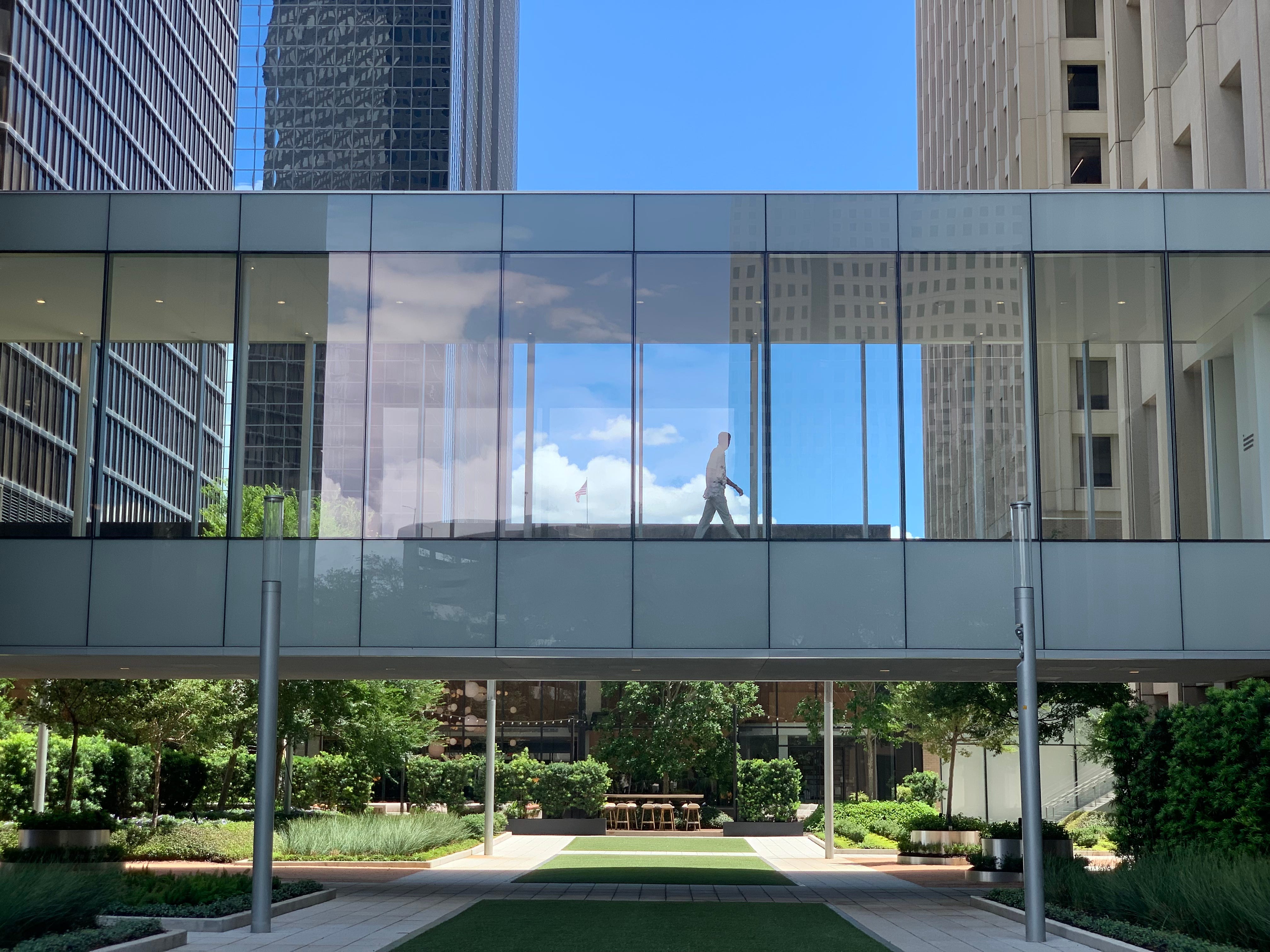
In the summer of 2022, a friend of mine visited the United States for the very first time, with his wife and their one-year-old child. During their stay, he and I ventured into downtown Houston to explore and admire the city’s architectural marvels. As we stood among the towering glass and steel, he was visibly moved. For him, these buildings represented the pinnacle of human progress—a tangible symbol of development. He looked on with reverence and despair, lamenting that our home countries in Africa might never reach such heights, not even in a hundred years.
But for the first time, I wasn’t awestruck. I wasn’t moved in the same way.
Later, we entered one of the Allen Centers along Dallas Street to seek relief from our hunger. What we found was more than food—it was a portal into another world. Everything inside gleamed: white walls, glossy black tiles, luminous silver rails, and seamless sheets of glass. As the escalator descended into the underground level, it felt as though the building had swallowed us whole. A new world emerged—sterile, pristine, and eerily immaculate. Pools of artificial light bathed every surface. The symmetry was flawless. The geometry was obsessively perfect. And for a moment, I felt something like nostalgia—but I couldn’t name its object.
Then it dawned on me.
This building was not just a product of engineering—it was a temple.
To enter it was to be discipled by it. The design commanded not just movement but behavior. It shaped how you thought, how you stood, even how you felt. It was rigid, ordered, calculated—nothing left to chance. This was a secular cathedral, filled with invisible altars and golden calves: mathematics, science, reason. It was a house of worship for the gods of modernity. Mechanistic. Materialistic. Sacred.
Every line, surface, and reflection brimmed with precision. The flawless orderliness was, in its own way, spiritually arresting. It inspired a strange, involuntary impulse to revere or worship.
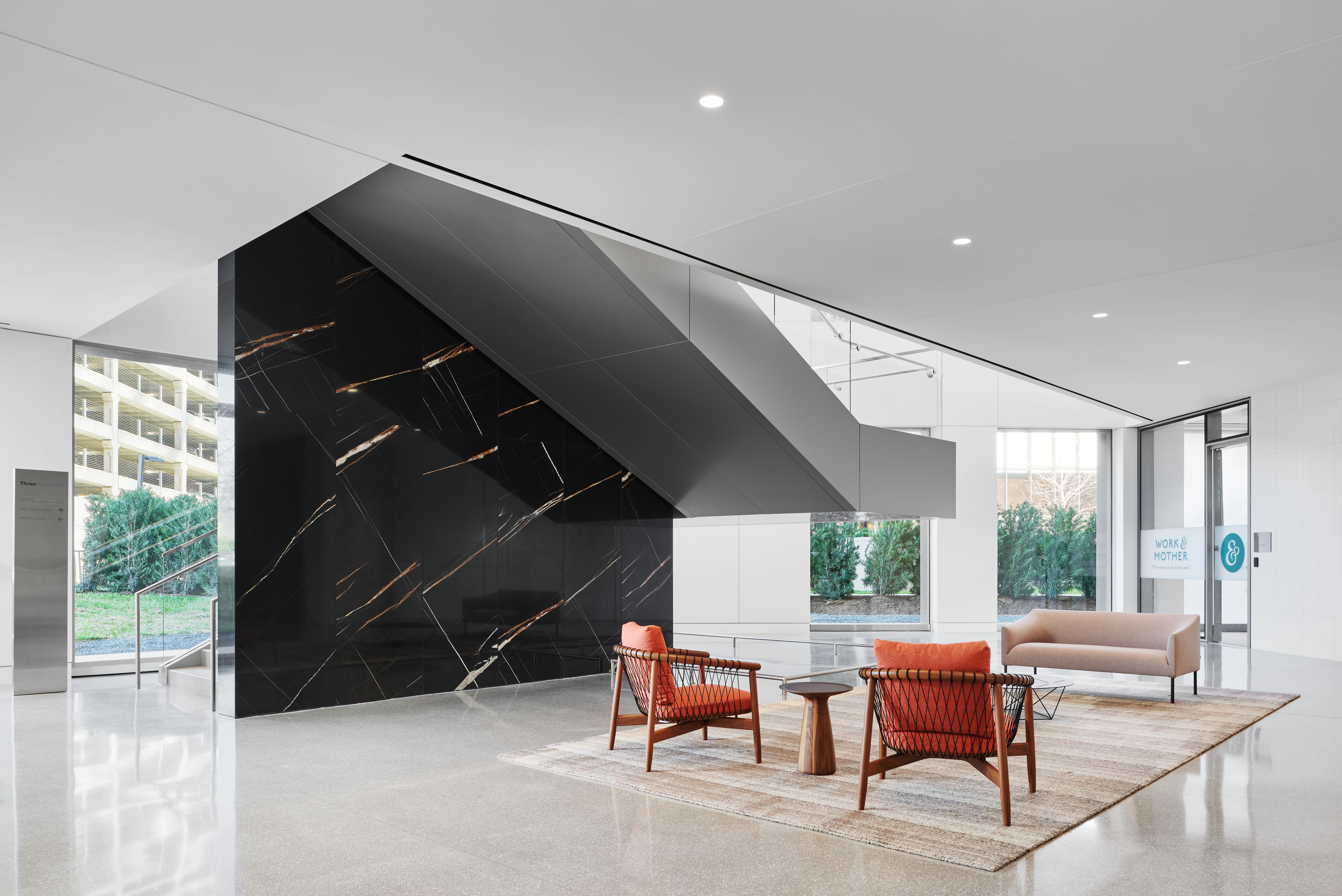
Our modern workplaces are no different. They are not merely functional—they are religious sites. They are sanctuaries of performance and efficiency, designed with the same architectural liturgy of rationality and control. These buildings do not merely reflect a philosophy; they incarnate it. They are temples of logical positivism.
At the heart of logical positivism lies a vision: the desire to reduce the world to its measurable parts—to uncover the mathematical “blueprint” behind everything. Mathematics becomes more than a tool; it becomes a worldview—a metaphysic not just of seeing the world but of inhabiting it. And once this vision took hold, it began shaping everything from philosophy to physics, from art to architecture.
Nancy Pearcey, in her book Saving Leonardo, captures this shift perfectly:
“Art was no longer the portrayal of a subject but the investigation of form.”
Art no longer depicted meaning—it measured it. This birthed movements like formalism and cubism, where the obsession wasn’t what a thing was, but what shape it could be reduced to. The form became the message.
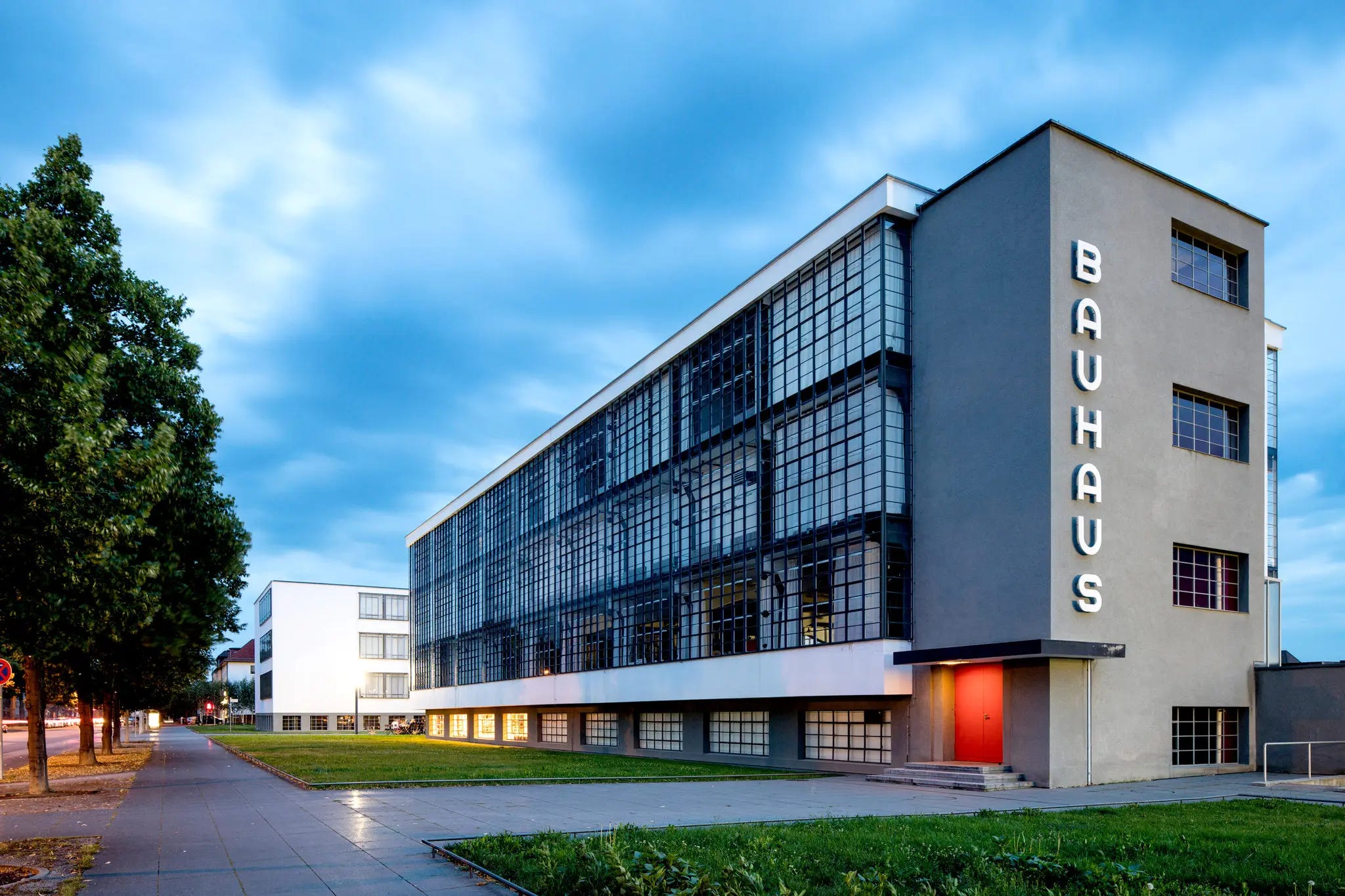
Architecture followed suit. Consider the famous Bauhaus Building in Dessau, Germany—the blueprint of the “International Style.” These boxy, glass-and-steel structures became icons of modernity. They multiplied across the West and now fill skylines across the world. By contrast, many European cities like Paris retained ornamentation—moldings, cornices, scrolls, Greek columns, Gothic spires. These embodied an entirely different worldview: one that saw beauty as intricately tied to meaning, and form as an expression of the sacred rather than a reduction of it.
As we sat in that Allen Center, my friend in awe, I found myself asking a question I had never truly voiced: Do I want this for Africa? Do I want our cities, our lives, our values to be shaped by this same metaphysic of precision and perfection? Is this what development should look like?
Logical positivism sees the world as a machine and people as interchangeable parts. It is obsessed with universals but forgets the individual. It praises efficiency but cannot account for love, joy, suffering, or the soul. It reveres what can be measured and discards what cannot.
What I felt in that moment wasn’t just nostalgia. It was grief.
The new religion is materialism. Its temples are everywhere—boardrooms, corporate towers, underground shopping centers, glowing white spaces bathed in artificial light. Its high priests are technocrats and engineers. Its sacraments are algorithms and balance sheets. Its dogma is the belief that what cannot be measured does not matter.
But we know this isn’t true. We know that life is more than logic, that beauty cannot be reduced to symmetry, and that people are more than data points.
We structure the world the way we see it. And the way we see it is shaped by our deepest beliefs—our metanoic vision, our vision of the good, the true, the beautiful.
Perhaps the future of Africa lies not in mimicking the monuments of Western modernity, but in cultivating a different kind of imagination—one that values the sacred, the local, the relational. One that sees the world not as a machine to be measured but as a gift to be received.
And I believe that the full embrace of the Christian imagination is the path to true progress—peace and prosperity—not only for Africa but for the West as well.
This robust Christian imagination once shaped the very foundations of Western civilization. Though much of Europe now lies spiritually desolate, its great architectural wonders—cathedrals, basilicas, and chapels—still stand as testaments. Many have been reduced to hollow monuments, relics of a bygone era, yet they continue to bear witness to the architectural legacy of the Christian imagination. They are haunted by a lingering glory, a faint echo of the eternal vision that once animated stone, glass, and spire into acts of worship.
If Africa is to build such an enduring legacy, it too must recover and embrace that same Christian imagination—the imagination that shaped Europe at its height. The way forward into long-abiding shalom, embodied in the work of our hands, is not found in the fleeting promises of modernity but in the Way, the Truth, and the Life (John 14:6). Whoever believes that Christianity stands opposed to progress and human flourishing has misunderstood the very heart of the faith.
True progress is not found in the thoughtless imitation of the secular West, but in a reimagining of our identity as image-bearers of God. Africa’s future depends on this: seeing ourselves anew in the grand story of creation and redemption, called as culture-makers to shape architecture, art, and society with eternity in view.
If Africa must stand, she must fall to her knees before the cosmic King—the source of all creative genius of humanity. If Africa must rise, she must bow and confess that Christ is the Lord of the land, the Ruler of the raging seas, the Maker of heaven and earth—the King of all true knowledge and the fountain of all human flourishing.
But Africa must also readily acknowledge that the cosmic King came as master-servant to save and redeem the world—and as the Word of God, Christ, lies at the center of the restoration of the cosmic order that enables human flourishing by the Spirit through faith in Christ.
Africa will grow taller when she bows. God bless Africa!
Inspiring! May your vision for Africa come to fruition by God’s sovereign power and for His wondrous glory!
This is fantastic! Love it!